With the deepening advancement of the "dual carbon" goals, the aluminum industry, as a high-energy-consuming sector, is accelerating its exploration of green transformation pathways. Compared to traditional coal power, the PV resources in north-west China have significant cost advantages in power generation, but their intermittent nature also brings new challenges. The application of energy storage systems is becoming a key support for enhancing the stability of new energy power supply and ensuring the continuous operation of aluminum smelters.
At the SMM CLNB+AICE New Energy and Aluminum Industry Conference held from April 16 to April 18, aluminum enterprises and PV/ESS companies deeply discussed this emerging industry trend, providing new solutions for increasing the proportion of new energy usage in China's aluminum industry and achieving the "dual carbon" goals.
-
Motivations for Aluminum Smelters to Invest in Energy Storage
With the clear targets of carbon peaking by 2030 and carbon neutrality by 2060, the demand for low-carbon transformation in the aluminum industry is becoming increasingly prominent. Although Yunnan currently has abundant hydropower resources, the unstable power supply during the dry season has gradually led aluminum enterprises to turn their attention to the wind and PV resources in north-west China (Xinjiang, Tibet, Inner Mongolia, and Qinghai). However, due to the intermittent and unstable nature of wind and PV power generation, the construction of energy storage systems is crucial for ensuring the continuous and stable power supply for aluminum production. In other words, to achieve the same level of power supply stability and flexible response capability as coal power, the "PV + ESS" model will be a necessary investment direction for aluminum enterprises.
According to SMM calculations, the current cost of coal power generation is approximately 0.48 yuan/kWh, while the cost of PV power generation in north-west China is only 0.15 yuan/kWh, and the cost of LFP battery storage is about 0.4 yuan/kWh (assuming 300 cycles per year). Therefore, when considering national subsidies, if the levelized cost of energy storage power stations can be reduced to below 0.35 yuan/kWh, PV ESS integration will have significant cost advantages and is expected to gradually replace traditional thermal power, becoming the main power supply mode for the aluminum industry.
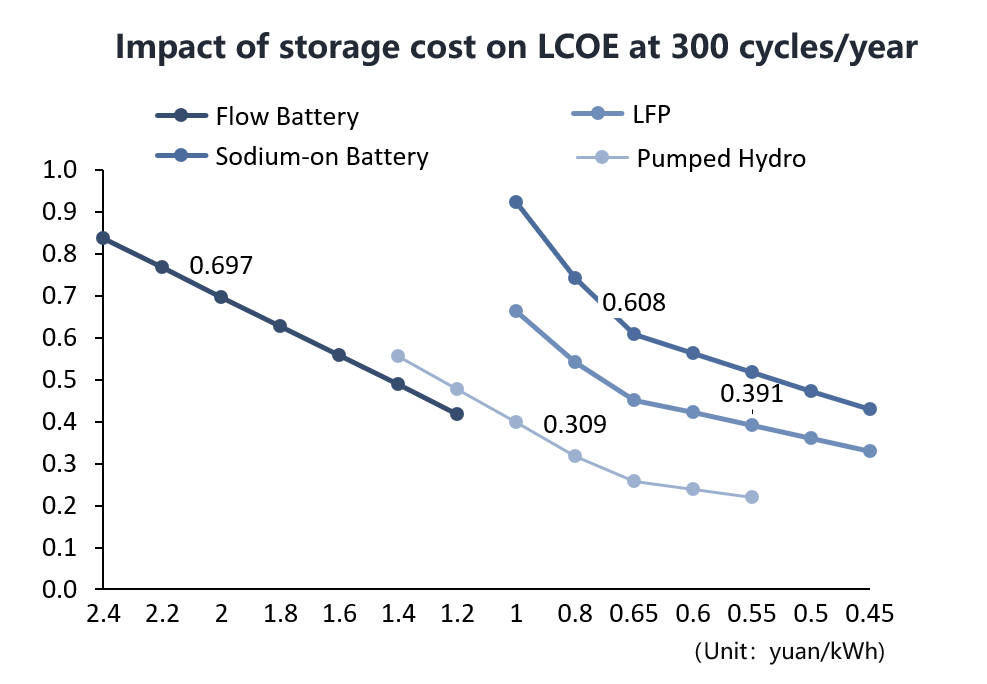
In summary, there is a clear demand basis for aluminum smelters to invest in energy storage, but there are still significant obstacles to actual implementation. Specifically:
-
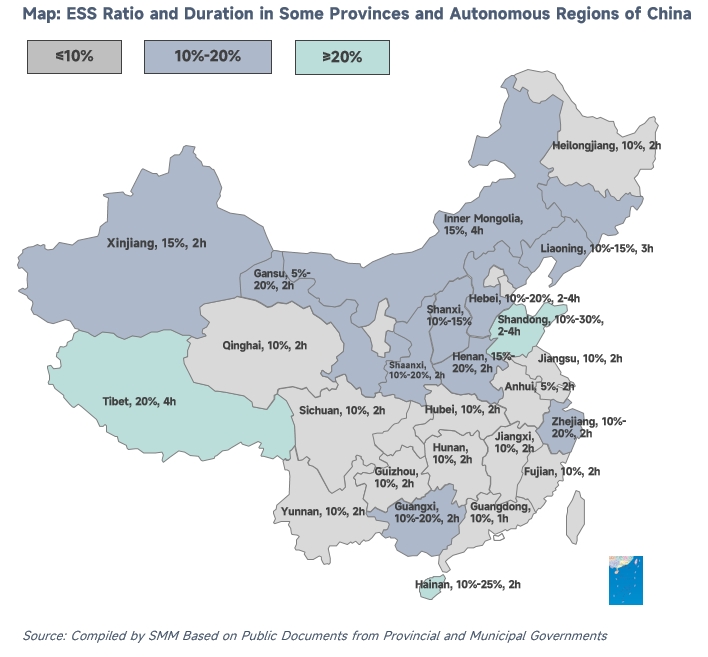
Impact of Mandatory Energy Storage Allocation and Subsidy Policies If aluminum smelters build new PV power stations in north-west China and connect them to the public grid, they can enjoy certain subsidies. For example, Inner Mongolia will provide a subsidy of 0.35 yuan/kWh for public grid discharge of new energy storage power stations in 2025, but they must also meet national mandatory energy storage requirements. For instance, the "Several Policies of Inner Mongolia Autonomous Region to Support the Development of New-Type Energy Storage (2022–2025)" issued in 2022 clearly stipulates that the energy storage allocation should not be less than 15% of the installed capacity of new energy projects, with a storage duration of more than 2 hours. Taking a 40MW PV power station as an example, at least a 6MW/12MWh energy storage power station needs to be built based on an average discharge of 2 hours.
-
High Construction Costs and Changing Subsidy Trends The construction cost of energy storage power stations is high, and independent construction by a single enterprise is economically insufficient and has low capacity. Some enterprises are trying to jointly invest in and build energy storage projects. On the other hand, the national mandatory energy storage requirements are gradually being phased out starting from February 2025, and related subsidies are also showing a downward trend, further reducing the enthusiasm of enterprises to invest in energy storage.
-
Insufficient Market Premium for Green Power Aluminum The current market premium for green power aluminum is low, only 150-300 yuan/mt, and the demand can basically be met by the existing green power capacity in Yunnan. From the perspective of corporate profitability, the cost of building a thermal power plant is still lower than the PV ESS integration scheme (e.g., in Xinjiang), leading to a lack of motivation for enterprises to invest in energy storage facilities.
-
Overall Prospects for Aluminum Smelters Investing in Energy Storage
According to SMM, more and more aluminum enterprises in north-west China have begun preliminary construction of energy storage systems, but overall development is still in its early stages. SMM believes that the widespread investment and use of energy storage in high-energy-consuming industries such as aluminum is a certain trend in the future. Among them, the continuous growth in market demand for green power aluminum and the corresponding increase in premium levels will be important factors driving enterprises to accelerate energy storage investments; while the national "dual carbon" goals will be a long-term stable driving force for energy storage investments.
Although the progress of aluminum capacity replacement in Yunnan is relatively slow and the relocation costs are high with insufficient green power aluminum premiums, the enthusiasm of enterprises to actively increase the proportion of new energy power supply is low in the short term. However, in the long run, the increase in the proportion of new energy in China's aluminum industry remains a clear development direction, and its advancement speed will mainly depend on the extent of the decline in energy storage construction costs, changes in policy subsidy intensity, and the increase in market demand and premiums for green power aluminum products.